
 English
  Vietnamese
Recent TRG blog posts
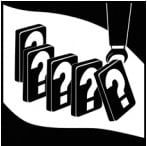
When confronted with a problem, have you ever stopped and asked “why” five times? If you do not ask the right question, you will not get the right answer. The Five Whys is a simple question-asking technique that explores the cause-and-effect relationships underlying problems.
0 Comments Click here to read/write comments
Blog Topics: Talent Management

Worried about preserving your privacy in an online world where privacy is disappearing? Here are seven Firefox add-ons that will help.
As strange as it might sound, there are times when I wish for the old days of the Internet circa the early 1990's. The days of Mosaic and Lynx, where there was no Flash, no Javascript and no Java. A simpler time where protecting your privacy and security wasn't as essential as it is today.
0 Comments Click here to read/write comments

0 Comments Click here to read/write comments
Blog Topics: Financial consolidation, planning and reporting, Enterprise Performance Management (EPM)
0 Comments Click here to read/write comments
Blog Topics: Financial consolidation, planning and reporting, Enterprise Performance Management (EPM)

To assist in delivering improved overall business performance, CFOs have reasserted their role as owners of both financial and management information and processes. A corporation with the right processes in place is able to turn its attention to added value finance: evaluating strategies, assessing how to drive top line growth, improve the bottom line, and using assets more effectively. Most management processes are linked to each other in one way or another. Budgeting and planning, for instance, are intrinsically intertwined with other financial processes like consolidation, reporting, risk management and analysis. These processes, in turn, provide critical insight for managing risk, steering corporate performance and shareholder value, as well as making strategic decisions.
0 Comments Click here to read/write comments
Blog Topics: Planning and Budgeting, Enterprise Performance Management (EPM)

“The market for corporate performance management (CPM) suites continues to grow rapidly,” declared Gartner in its latest Magic Quadrant for CPM suites. Why? Gartner explains: “because CPM has helped to manage cost optimization efforts and is now increasingly employed in supporting growth-based strategies.”
That certainly was what led the AAA in west/central New York to opt for CPM from Prophix Software. “We’re able to provide our executive team with business information faster than ever before and do analysis on the information so they can see why something is up or down,” said Kristy Chapman, the auto club’s financial planning and reporting manager.
0 Comments Click here to read/write comments
Blog Topics: Planning and Budgeting, Financial consolidation, planning and reporting, Enterprise Performance Management (EPM)
"A good plan executed today is better than a perfect plan executed tomorrow." - General George S. Patton Jr.
Isn't it interesting that one of the most valuable currencies of all in modern retailing is time - yet it is never really the direct topic for discussion.
Why do we disregard one of the most significant impacts of all the elements that influence us, including our customers and our perceptions? Fundamentally, it is time that is the single greatest product that the technological revolution has produced.
At the 2011 World Retail Conference (sounding “so last year” already?) we heard speakers such as Tommy Hilfiger speak about “real” time. That is, communicating with our customers in real time - being instant, simultaneous, interactive and above all now.
So what did we do prior to this? We communicated a message to our customers based on past trends, seasonal drops and historical forecasts. All the time we were thinking, guessing and hoping we had accurately predicted what they might want or need going forward.
We based our decisions not on real time, rather on past time.
So the first conclusion is that we must use all our available communication channels to communicate with our customers. Or to quote the more eloquent Tommy Hilfiger, "It’s about keeping up with the consumer, seeing in real time with the consumer through Twitter, Facebook and My Space, then listening to what they have to say.”
0 Comments Click here to read/write comments
Blog Topics: Retail Management System
"A good plan executed today is better than a perfect plan executed tomorrow." - General George S. Patton Jr.
Isn't it interesting that one of the most valuable currencies of all in modern retailing is time - yet it is never really the direct topic for discussion.
Why do we disregard one of the most significant impacts of all the elements that influence us, including our customers and our perceptions? Fundamentally, it is time that is the single greatest product that the technological revolution has produced.
At the 2011 World Retail Conference (sounding “so last year” already?) we heard speakers such as Tommy Hilfiger speak about “real” time. That is, communicating with our customers in real time - being instant, simultaneous, interactive and above all now.
So what did we do prior to this? We communicated a message to our customers based on past trends, seasonal drops and historical forecasts. All the time we were thinking, guessing and hoping we had accurately predicted what they might want or need going forward.
We based our decisions not on real time, rather on past time.
So the first conclusion is that we must use all our available communication channels to communicate with our customers. Or to quote the more eloquent Tommy Hilfiger, "It’s about keeping up with the consumer, seeing in real time with the consumer through Twitter, Facebook and My Space, then listening to what they have to say.”
0 Comments Click here to read/write comments
Blog Topics: Retail Management System

Most small retail store owners know the importance of a killer window display. But why bother spending precious advertising dollars on signage inside your store?
That’s easy – your sales happen inside your store.
Foot traffic is crucial, but it doesn’t change the bottom line: your store needs sales to thrive. In-store signage can help solve a world of problems. Let’s look at three examples where attractive and organized signage can be a dealmaker.
0 Comments Click here to read/write comments
Blog Topics: Retail Management System

